
7 Essential Backup Inverter For Home Options in 2026
Power outages are becoming more common across neighborhoods, driving homeowners to seek dependable solutions like a backup inverter for home. As inverter technology advances, these systems have become crucial for maintaining uninterrupted power during unexpected blackouts. Selecting the right backup inverter for home brings significant benefits, including energy savings, peace of mind, and protection for your essential devices. This guide will walk you through the top 7 essential backup inverter for home options in 2026, outlining their key features, pricing, and best-fit scenarios. You will also find expert comparisons, must-have features, and practical tips for making the best choice.
What is a Backup Inverter for Home?
A backup inverter for home is a specialized device designed to keep your household powered during unexpected outages. Unlike standard inverters that simply convert DC to AC power for limited applications, a backup inverter for home ensures that essential appliances and systems remain operational when the grid goes down. It works by converting stored DC energy from batteries or solar panels into usable AC electricity for your home’s circuits. This seamless transition is crucial for maintaining comfort, safety, and productivity. For those interested in whole-home energy solutions, the Whole house solar system guide offers deeper insights into integrating inverters with solar systems.
Definition and Core Functionality
A backup inverter for home acts as the bridge between stored energy and your household needs. When grid power fails, it automatically switches to draw energy from batteries or solar panels, instantly converting DC electricity into the AC power your appliances require. This functionality is essential for homes that rely on uninterrupted power for critical devices. The main distinction from standard inverters is its focus on reliability and automation during outages, making it a vital component in emergency preparedness and off-grid living scenarios.
Types of Backup Inverters
There are several types of backup inverter for home setups available today. Pure sine wave inverters deliver clean, stable power suitable for sensitive electronics, while modified sine wave inverters are more affordable but less ideal for advanced devices. Hybrid inverters have gained popularity because they integrate solar, battery, and grid power, offering maximum flexibility. Homeowners can choose between standalone units or integrated systems that combine inverter, charger, and controller functions into one package.
Key Features to Consider
Selecting the right backup inverter for home involves evaluating several critical features. Output capacity determines how many appliances you can run simultaneously. Efficiency affects both energy savings and long-term costs. Battery compatibility is key, especially if you plan to expand or upgrade your system. Modern units often offer smart features like Wi-Fi or app control for real-time monitoring and remote management. Always look for safety certifications and a robust warranty to protect your investment.
Example Use Cases
A backup inverter for home proves its value in many real-life situations. It can keep medical equipment running for patients at home, ensure refrigeration for food safety, or power a home office during work-critical hours. Reliable backup power supports both daily comfort and emergency readiness.
Relevant Statistics
The demand for backup inverter for home solutions is rising sharply. According to leading market research, the U.S. backup power market is projected to grow by over 8 percent annually through 2026, reflecting growing concerns about power reliability and the increasing adoption of solar and battery technologies.
7 Essential Backup Inverter for Home Options in 2026
Choosing the right backup inverter for home use in 2026 can be a game changer for energy security, comfort, and peace of mind. With more families seeking reliable backup solutions, the market now offers a diverse range of advanced products. Below, we explore the top 7 options, highlighting their standout features, benefits, and suitability for different needs.
KingAire Home Power Inverter Solutions
KingAire stands out as a leader in backup inverter for home systems, especially for Florida homeowners. Their expertise spans solar integration, backup solutions, and customized energy management.

7 Essential Backup Inverter For Home Options in 2026 - KingAire Home Power Inverter Solutions
Core Features:
Hybrid inverter compatibility for seamless solar, grid, and battery use
Professional installation by certified electricians
Surge protection and safety-first engineering
Solar battery integration for extended backup
Key Benefits:
Achieve energy independence and uninterrupted comfort
Receive ongoing maintenance and 24/7 support
Tailored systems fit unique household needs
Ideal For: Homeowners wanting a turnkey backup inverter for home setup, especially those prioritizing local expertise and full-service solutions.
Pros:
Local, hands-on support
Comprehensive service from consultation to maintenance
Customizable for all home sizes
Cons:
Pricing varies by project scope, so a personalized quote is required
Pricing: Free estimates, with solution pricing based on home assessment.
If you’re weighing your options between a backup inverter for home and other solutions like portable generators, check out this detailed House backup power vs portable generators comparison to find the best fit.
Tesla Powerwall+ Inverter
Tesla Powerwall+ remains a flagship backup inverter for home use, blending cutting-edge technology with user-friendly design. The Powerwall+ combines a high-capacity battery and integrated inverter into a single, elegant unit.
Features:
13.5 kWh storage capacity per unit, scalable up to 10 units
Integrated inverter for seamless backup and solar usage
App-based monitoring, control, and alerts
Automatic outage detection and instant switchover
Benefits:
Effortless backup for the entire home, including sensitive electronics
Sleek, wall-mounted design with minimal footprint
Robust third-party support and continuous updates
Ideal For: Tech-savvy homeowners, solar adopters, and smart home enthusiasts seeking a premium backup inverter for home.
Pros:
High efficiency and reliability
Intuitive app for real-time management
Industry-leading brand reputation
Cons:
Higher upfront investment
Requires certified professional installation
Pricing: Installed systems typically range from $11,500 to $16,000, depending on region and configuration.
Sungrow Hybrid Inverter SH5.0/6.0/8.0/10RT
Sungrow’s hybrid inverter models are highly regarded for flexibility and efficiency, making them a strong choice as a backup inverter for home power management.

7 Essential Backup Inverter For Home Options in 2026 - Sungrow Hybrid Inverter SH5.0/6.0/8.0/10RT
Features:
Hybrid solar inverter with up to 98% efficiency
Supports a wide range of battery options
Wi-Fi connectivity for remote monitoring
Works for both grid-tied and off-grid applications
Benefits:
Allows smooth transition between solar, grid, and battery power
Modular approach for future upgrades
Easy integration into existing or new solar panel setups
Ideal For: Households with existing solar panels or those planning to upgrade to a smart backup inverter for home.
Pros:
High conversion efficiency
Flexible battery compatibility
Global support network
Cons:
Professional installation typically required
Compatibility check needed for certain batteries
Pricing: $2,500–$4,000 for the inverter only, with batteries priced separately.
Generac PWRcell Inverter
Generac’s PWRcell system is engineered for homeowners needing robust whole-house backup inverter for home performance. Its modular design scales to match high energy demands.
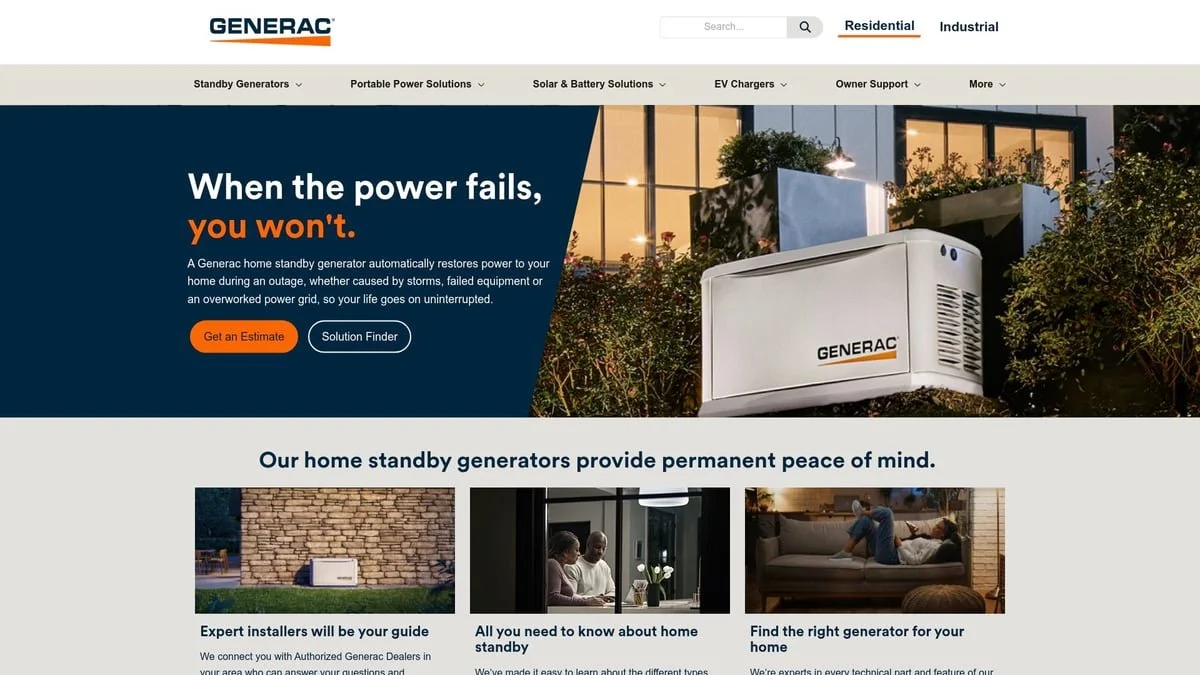
7 Essential Backup Inverter For Home Options in 2026 - Generac PWRcell Inverter
Features:
Modular battery storage from 9 kWh to 18 kWh
Integrated backup inverter and smart load management
Solar ready for easy integration
Real-time system monitoring
Benefits:
Provides whole-home backup for extended outages
Dynamic load management optimizes power usage
Backed by Generac’s trusted reliability
Ideal For: Large homes, families with high energy needs, or anyone wanting a resilient backup inverter for home use.
Pros:
Scalable to growing household needs
Comprehensive monitoring and support
Proven brand with nationwide service
Cons:
Higher initial investment
Installation can be complex and time-consuming
Pricing: Complete systems typically cost $10,000–$15,000 installed.
EcoFlow DELTA Pro Smart Inverter
EcoFlow DELTA Pro offers a unique portable backup inverter for home applications, combining flexibility with powerful performance.

7 Essential Backup Inverter For Home Options in 2026 - EcoFlow DELTA Pro Smart Inverter
Features:
3.6–25 kWh expandable battery capacity
Fast charging from AC, solar, or EV outlets
Wi-Fi/app control and energy tracking
Plug-and-play operation
Benefits:
Portability enables use in homes, RVs, or for outdoor events
No hardwiring needed, so setup is quick and easy
Solar charging compatibility for sustainable backup
Ideal For: Renters, small homes, or anyone needing a versatile backup inverter for home and travel.
Pros:
Lightweight and portable
Flexible use scenarios
Expandable storage
Cons:
Not designed for permanent, whole-home backup
Limited hardwired integration
Pricing: Base unit starts at $3,699, with expansion options available.
Enphase IQ Battery & Inverter System
The Enphase IQ Battery & Inverter System brings modular, microinverter-based backup inverter for home solutions, ideal for solar upgrades or new installations.

7 Essential Backup Inverter For Home Options in 2026 - Enphase IQ Battery & Inverter System
Features:
Integrated microinverter and battery storage
Real-time energy monitoring via mobile app
Modular design for easy expansion
Seamless solar integration
Benefits:
Flexible installation, even in tight spaces
Easily scales as your needs grow
Strong warranty and customer support
Ideal For: Homes with existing Enphase microinverters or those seeking a modular, expandable backup inverter for home.
Pros:
Easy to expand over time
Reliable, with robust app-based management
Trusted brand in microinverter technology
Cons:
Works best within the Enphase ecosystem
Premium pricing compared to basic solutions
Pricing: Installed systems typically range from $5,000–$10,000 or more, depending on configuration.
Luminous Zelio+ 1100 Home Inverter
Luminous Zelio+ 1100 is a dependable, budget-friendly backup inverter for home use, designed for essential loads during outages.

7 Essential Backup Inverter For Home Options in 2026 - Luminous Zelio+ 1100 Home Inverter
Features:
Pure sine wave output for sensitive electronics
LCD display for status and diagnostics
Supports up to 900 VA
Low maintenance design
Benefits:
Affordable and user-friendly for small homes
Reliable operation for key appliances and devices
Simple installation process
Ideal For: Budget-conscious homeowners, apartments, or those needing a basic backup inverter for home essentials.
Pros:
Cost-effective entry point
Easy to use and maintain
Established brand reputation
Cons:
Limited capacity, not suitable for whole-home backup
Separate battery purchase required
Pricing: $140–$250 for the inverter, with batteries sold separately.
Backup Inverter for Home Comparison Table
| Product | Type | Storage Capacity | Ideal For | Price Range |
|---|---|---|---|---|
| KingAire Home Power Inverter Solutions | Hybrid/Custom | Customizable | Turnkey, Florida | Custom quote |
| Tesla Powerwall+ Inverter | Hybrid | 13.5–135 kWh (stack) | Smart homes | $11,500–$16,000 |
| Sungrow Hybrid Inverter | Hybrid | Battery-dependent | Solar upgrades | $2,500–$4,000* |
| Generac PWRcell Inverter | Hybrid | 9–18 kWh (modular) | Large homes | $10,000–$15,000 |
| EcoFlow DELTA Pro Smart Inverter | Portable | 3.6–25 kWh | Renters, RVs | $3,699+ |
| Enphase IQ Battery & Inverter System | Modular/Microinverter | Modular | Solar, expandability | $5,000–$10,000+ |
| Luminous Zelio+ 1100 Home Inverter | Standalone | Up to 900 VA | Small homes | $140–$250* |
*Inverter only, batteries extra
With these seven backup inverter for home options, you can match the right system to your energy requirements, lifestyle, and budget. Each solution offers distinct advantages, whether you need whole-home backup, portability, or seamless solar integration.
How to Choose the Right Backup Inverter for Your Home
Selecting the right backup inverter for home use is a crucial decision that impacts your comfort, safety, and energy costs during outages. With so many options on the market, a step-by-step approach can help ensure you invest in a system that truly fits your needs.
Assessing Your Power Needs
Begin by identifying which appliances and systems are critical during an outage. List items such as refrigerators, medical equipment, routers, and lighting. Calculate both peak and continuous wattage for these essentials. Use this information to determine the minimum output capacity your backup inverter for home must provide. This step helps prevent under-sizing, which can lead to system overloads or device failures.
Compatibility and Integration
Check whether your backup inverter for home will integrate with existing solar panels, battery banks, or future upgrades. Compatibility ensures smooth operation and makes expansion easier. For those considering off-grid or hybrid setups, consult resources like the Off-grid solar power blueprint to understand inverter roles and integration best practices. Always verify system requirements before purchase.
Installation and Maintenance Considerations
Decide if you’ll use professional installers or prefer a do-it-yourself approach. Certified professionals offer expertise and may be required for warranty validation. Maintenance is another factor: some backup inverter for home models feature remote monitoring and app-based diagnostics, which simplify upkeep. Regular inspections and firmware updates can prolong system life and ensure reliable performance.
Cost and Value Analysis
Compare upfront costs against long-term savings, factoring in energy efficiency and potential incentives. Many homeowners qualify for rebates or financing programs, making advanced systems more accessible. Use a table to compare options:
| Inverter Type | Initial Cost | Incentives/Rebates | Long-term Savings |
|---|---|---|---|
| Hybrid | High | Yes | Significant |
| Pure Sine Wave | Moderate | Sometimes | Moderate |
| Portable | Low | Rare | Limited |
Evaluate total value, not just sticker price.
Safety and Reliability
Prioritize models with recognized safety certifications such as UL or CE. A backup inverter for home should have a proven reliability record and positive user reviews. Look for built-in protections like surge suppression and temperature monitoring. These features guard your investment and protect sensitive electronics from damage during power transitions.
Example Scenarios
Consider how different households use their systems. For families with medical needs, uninterrupted power is essential. Remote workers may prioritize internet and computer uptime. In areas prone to frequent outages, a robust backup inverter for home provides peace of mind and maintains normalcy. Review case studies or consult professionals for tailored recommendations.
Backup Inverter Trends and Innovations for 2026
Staying ahead of the curve with a backup inverter for home means understanding the latest trends shaping the industry. As we move into 2026, homeowners can expect significant advancements that transform how backup power systems perform, integrate, and deliver peace of mind.
Advancements in Battery Technology
The backbone of any backup inverter for home is the battery system. In 2026, lithium iron phosphate (LiFePO4) and solid-state batteries are leading a revolution in performance and safety. These new chemistries deliver higher energy density, faster charging, and longer lifespans compared to older battery types.
Such advancements mean that homeowners can rely on their backup inverter for home to provide more consistent and safer power during outages. For a deeper dive into these battery innovations, see the Advancements in Battery Technology for Grid Storage.
Smart Features and IoT Integration
Today’s backup inverter for home is smarter than ever. Manufacturers are integrating Wi Fi and app-based controls, enabling homeowners to monitor energy usage, receive system alerts, and even perform remote diagnostics.
Many systems now offer detailed analytics, helping users optimize performance and reduce costs. Voice assistant compatibility and automation features are also becoming standard, making backup inverters a seamless part of the modern smart home.
Grid Interaction and Energy Independence
Modern backup inverter for home systems are not just about emergency power. Increasingly, they interact with the grid, supporting net metering, demand response, and even participation in Virtual Power Plants (VPPs).
This trend empowers homeowners to both save money and contribute to grid stability. By managing energy flows intelligently, these inverters help maximize self consumption and promote energy independence.
Regulatory Changes and Incentives
Regulations and incentives are evolving to support safer, more efficient backup inverter for home installations. New building codes emphasize safety certifications like UL and CE, while governments offer rebates and tax credits for qualifying systems.
Regional trends, such as Florida’s push for solar and backup power, are shaping adoption rates. Staying informed about local policies can help homeowners maximize their return on investment.
Market Growth and Consumer Adoption
The backup inverter for home market is experiencing rapid growth, driven by rising demand for resilience and energy savings. According to Hybrid Inverter Market Growth Projections, the hybrid inverter segment is expected to see significant expansion through 2034.
Consumer preferences are shifting toward smart, integrated solutions that offer both backup and energy management. As these trends continue, homeowners can expect even more innovative options and better value in the years ahead.
Frequently Asked Questions About Home Backup Inverters
Choosing the right backup inverter for home use brings up many important questions. Below, we address the most common concerns to help you make informed decisions for your energy needs.
1. What size backup inverter for home do I need?
Calculate your essential devices' total wattage, then choose an inverter that supports at least that load.
2. Can I use a backup inverter for home with solar panels?
Yes, most models support solar integration. For details on setups without batteries, see this Solar panels without battery guide.
3. How long will my backup inverter for home run during an outage?
Runtime depends on battery capacity and your power usage. Larger batteries extend backup time.
4. What maintenance is required for backup inverter for home?
Regularly check connections, batteries, and system alerts. Most modern units require minimal upkeep.
5. Are backup inverter for home systems safe for sensitive electronics?
Pure sine wave inverters are recommended for sensitive devices, ensuring stable, safe power supply.
6. How do I know if my backup inverter for home is compatible with my home wiring?
Consult your installer or electrician to ensure proper sizing and integration with your home electrical system.
7. What are the main differences between hybrid and standard backup inverter for home?
Hybrid inverters support solar, batteries, and grid, while standard models usually work with batteries only.
As you explore these top backup inverter options for 2026, you can see how choosing the right system means more than just keeping the lights on—it’s about peace of mind, energy savings, and protecting what matters most in your home. If you’re ready to take the next step toward reliable, customized backup power, I encourage you to reach out for expert guidance. You don’t have to navigate all the technical details alone—let a local professional help you find the perfect fit for your needs. Get a Free Quote and start planning your energy independence today.