
Off Grid Solar Power Setup Guide: Your 2026 Survival Manual
Imagine a sudden blackout with no grid restoration in sight. Would you know how to keep your home running, your food fresh, and your family safe? In 2026, energy uncertainty is a real concern, making an off grid solar power setup essential for peace of mind.
This guide will walk you through every step, from understanding the basics to installing and maintaining your own system. Discover how to gain control, security, and comfort even when the grid fails. Ready to take action? Explore how to build your energy independence, starting now.
Understanding Off Grid Solar Power: The Basics
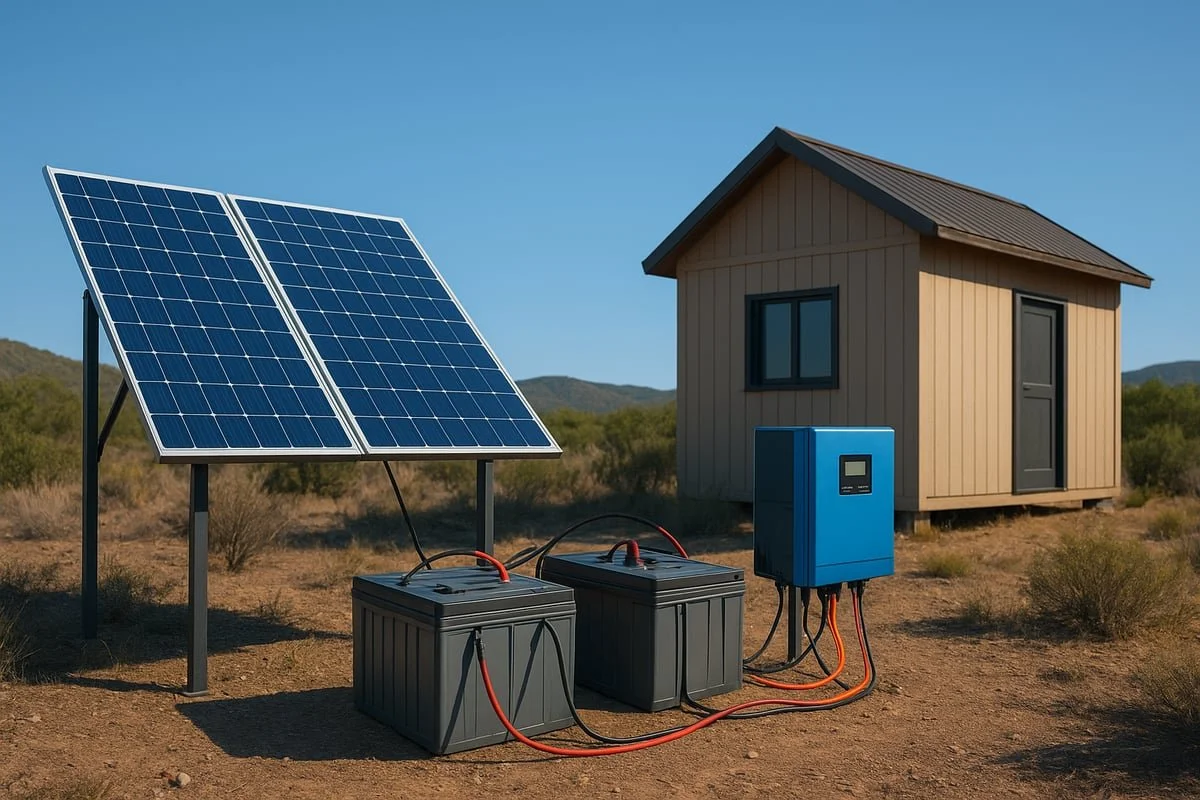
Imagine living where the grid cannot reach or where power outages are frequent. The off grid solar power setup is your answer to energy independence in these scenarios. Before diving into design and installation, it is crucial to grasp what going off grid truly means, the components involved, and the latest trends shaping off grid solar in 2026.
Understanding Off Grid Solar Power: The Basics
What Does "Off Grid" Really Mean?
At its core, an off grid solar power setup operates completely independently from the utility grid. Unlike grid-tied systems, which rely on external power lines as backup, or hybrid systems that combine solar with grid connectivity, off grid setups are self-reliant.
This approach is essential for remote cabins, survival retreats, or homesteads where grid access is impossible or unreliable. It is also vital for disaster preparedness, as it ensures you have power when the grid fails.
Key benefits of an off grid solar power setup include:
Independence: Free yourself from rising utility rates and outages.
Resilience: Maintain critical loads during storms or disasters.
Sustainability: Reduce reliance on fossil fuels.
However, there are challenges to consider:
Upfront investment for equipment and installation.
Ongoing maintenance for batteries and electronics.
Weather dependence, especially during cloudy or winter periods.
For a deeper dive into the essentials, you can explore this Off Grid Solar Power Guide which outlines the foundational steps for a robust off grid solar power setup.
Components of an Off Grid Solar System
Every off grid solar power setup relies on several core components, each with a vital role in the system’s performance and reliability.
Solar panels come in three main types:
| Type | Efficiency | Typical Use |
|---|---|---|
| Monocrystalline | 20-23% | High efficiency, compact |
| Polycrystalline | 16-18% | Budget-friendly |
| Thin-film | 10-13% | Flexible, portable |
Charge controllers regulate the flow of electricity from panels to batteries:
PWM: Simple, cost-effective, less efficient
MPPT: Advanced, up to 30% more efficient
Batteries are the system’s backbone. Lead-acid batteries are affordable but heavy and need maintenance. Lithium-ion options, especially LiFePO4, offer longer cycle life, deeper discharge, and higher upfront cost, but lower cost per kWh over time.
Inverters convert DC (from batteries) to AC (for home use). Pure sine wave inverters provide clean, reliable power for sensitive electronics, while modified sine wave inverters are less expensive but less compatible.
Balance of system (BOS) includes wiring, fuses, mounting hardware, and monitoring devices. Proper BOS selection is key for the safety and efficiency of your off grid solar power setup.
Off Grid Solar Trends for 2026
The off grid solar power setup landscape is rapidly evolving. Solar panels are reaching new levels of efficiency and durability, with leading monocrystalline modules regularly exceeding 23% efficiency and lasting 30 years or more.
Battery technology is advancing, with solid-state batteries on the horizon. These offer faster charging, greater safety, and longer lifespans, making energy storage more reliable and affordable.
Adoption of off grid solar systems is on the rise worldwide, driven by climate concerns and grid instability. In the US, both rural homesteads and urban homeowners are turning to off grid solar power setup solutions.
Regulatory frameworks and incentives are also changing. Expect streamlined permitting, updated safety codes, and new financial incentives in 2026, making it easier and more cost-effective to invest in off grid solar.
Staying informed about these trends ensures your off grid solar power setup remains efficient, scalable, and future-proof.
Step 1: Assessing Your Power Needs
Understanding your unique energy requirements is the first step in any successful off grid solar power setup. Without an accurate assessment, your system could fall short or become unnecessarily expensive. This foundational process will guide you in building a system that matches your survival and comfort needs, both now and in the future.

Calculating Your Energy Consumption
Begin by creating a checklist of every appliance and device you intend to power with your off grid solar power setup. Include essentials like refrigerators, LED lights, water pumps, communication devices, and medical equipment. For each, record the wattage and estimate daily usage hours.
Use a watt-hour calculator or an energy audit worksheet to total your daily consumption. For example, a family of four might use a 100-watt refrigerator for 8 hours (800 Wh), 10 LED bulbs at 10 watts each for 5 hours (500 Wh), and other essentials totaling 2,500 Wh per day. By tallying each load, you can identify your true daily energy needs.
Determining System Size
Once you know your daily usage, size your off grid solar power setup to meet and exceed this demand. Add a 20-30% buffer to your total to account for losses and unexpected loads. For battery storage, plan for at least three days of autonomy to handle cloudy weather or emergencies.
Battery bank sizing depends on your daily watt-hour total and desired backup days. For example, if your daily use is 2,500 Wh, you'll need a battery bank capable of 7,500 Wh (or 7.5 kWh) at your system voltage. For a detailed walkthrough on sizing and component choices, consult this Off-Grid Solar System Design Guide.
Factoring in Location and Climate
Your location plays a major role in planning an off grid solar power setup. Review solar irradiance maps to see how much sunlight your area receives throughout the year. Consider shading from trees or buildings, and optimize your panel orientation and tilt for maximum output.
In regions like Florida, you must account for hurricane risks and cloudy periods. Install panels at a tilt that balances summer and winter sun, and secure all mounts to withstand high winds. Adjust calculations for shorter winter days to prevent seasonal shortfalls.
Planning for Growth and Emergencies
A robust off grid solar power setup should be modular, allowing for future expansion. Anticipate new appliances or increased usage, and design your system to scale up easily. During emergencies, you may need to power additional loads, so include redundancy in your plan.
Consider backup options like portable generators or extra battery modules. Redundant wiring, spare fuses, and surge protection can ensure your essentials remain powered if part of the system fails. This proactive approach builds resilience for both everyday needs and unexpected challenges.
Step 2: Selecting the Right Off Grid Solar Components
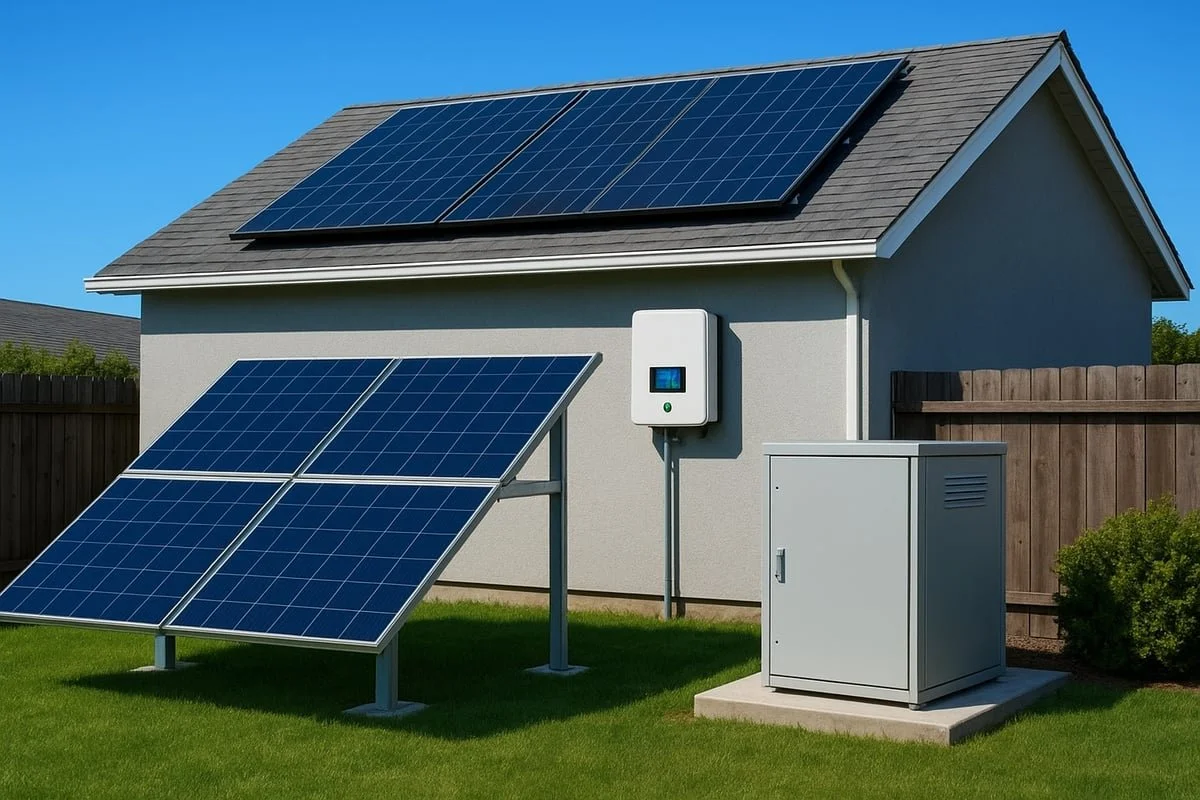
Selecting robust, efficient components is the foundation of a reliable off grid solar power setup. The right choices today will determine your system’s performance, longevity, and adaptability for years to come. Let’s break down each major element so you can make informed decisions for your energy independence.
Step 2: Selecting the Right Off Grid Solar Components
Choosing Solar Panels
Solar panels are the heart of any off grid solar power setup. Your main options are monocrystalline, polycrystalline, and thin-film panels. Monocrystalline panels offer the highest efficiency, typically 20-23 percent, making them ideal for limited space. Polycrystalline panels are slightly less efficient but more affordable. Thin-film panels are lightweight and flexible, though less efficient.
When comparing models, consider:
Efficiency rating (higher is better for compact arrays)
Durability and weather resistance
Warranty length (25 years is standard for quality panels)
Cost per watt
For example, a 400W monocrystalline panel will generate more power in less space than a 350W polycrystalline panel. Always ensure your panels are certified for harsh weather if you live in storm-prone areas.
Selecting Batteries
Batteries store your solar energy for use when the sun isn’t shining. The most common types for an off grid solar power setup are lithium iron phosphate (LiFePO4) and sealed lead-acid (AGM or gel). LiFePO4 batteries offer longer cycle life, deeper discharge, and higher efficiency, though they cost more upfront.
Key battery considerations:
Chemistry: LiFePO4 vs. AGM/lead-acid
Depth of discharge (DoD) and cycle life
Integrated battery management system (BMS) for safety
Cost per kWh over the battery’s lifetime
A 10kWh lithium battery bank is suitable for basic loads, while a 20kWh bank supports larger homes. For more on integrating batteries, see Transitioning to Off Grid Living.
Picking the Right Inverter
Your inverter converts DC power from the batteries into AC for household use. For an off grid solar power setup, choose a pure sine wave inverter for maximum compatibility with sensitive electronics.
When selecting an inverter:
Match inverter size to your peak and continuous load needs
Check surge capacity for motor-driven appliances
Look for smart monitoring and grid-forming capability for future upgrades
For instance, a 3kW inverter suits small homes, while larger systems may need 5kW or more. Always confirm the inverter is compatible with your battery bank voltage.
Charge Controllers and System Protection
A charge controller regulates the flow of energy from your panels to your batteries. MPPT (maximum power point tracking) controllers are up to 30 percent more efficient than PWM controllers, making them the top choice for any modern off grid solar power setup.
Don’t overlook system protection:
Install fuses and breakers for every major connection
Add surge protection devices to guard against lightning
Use disconnects for safe maintenance
Follow fire safety best practices, especially in battery enclosures
Accessories and Monitoring
Supporting hardware ensures your off grid solar power setup is reliable and easy to manage. Essential accessories include:
WiFi or cellular remote monitoring systems with mobile alerts
Roof and ground mounting hardware designed for your site
Weatherproof enclosures for batteries and inverters
Security features like locks and cameras for outdoor gear
Proper monitoring helps you catch issues early and optimize performance year-round.
KingAire: Florida’s Off Grid Solar Experts
If you live in Florida and want a professional off grid solar power setup, KingAire delivers licensed, insured, and turnkey solutions. Their team specializes in solar PV, battery systems, and surge protection designed for hurricane-prone areas.
Homeowners and businesses benefit from:
Free estimates and consultations
Certified electricians for safe, code-compliant installations
Ongoing maintenance and energy independence support
A trusted expert ensures your off grid solar power setup is ready for any emergency and future expansion.
Step 3: Designing and Installing Your Off Grid Solar System
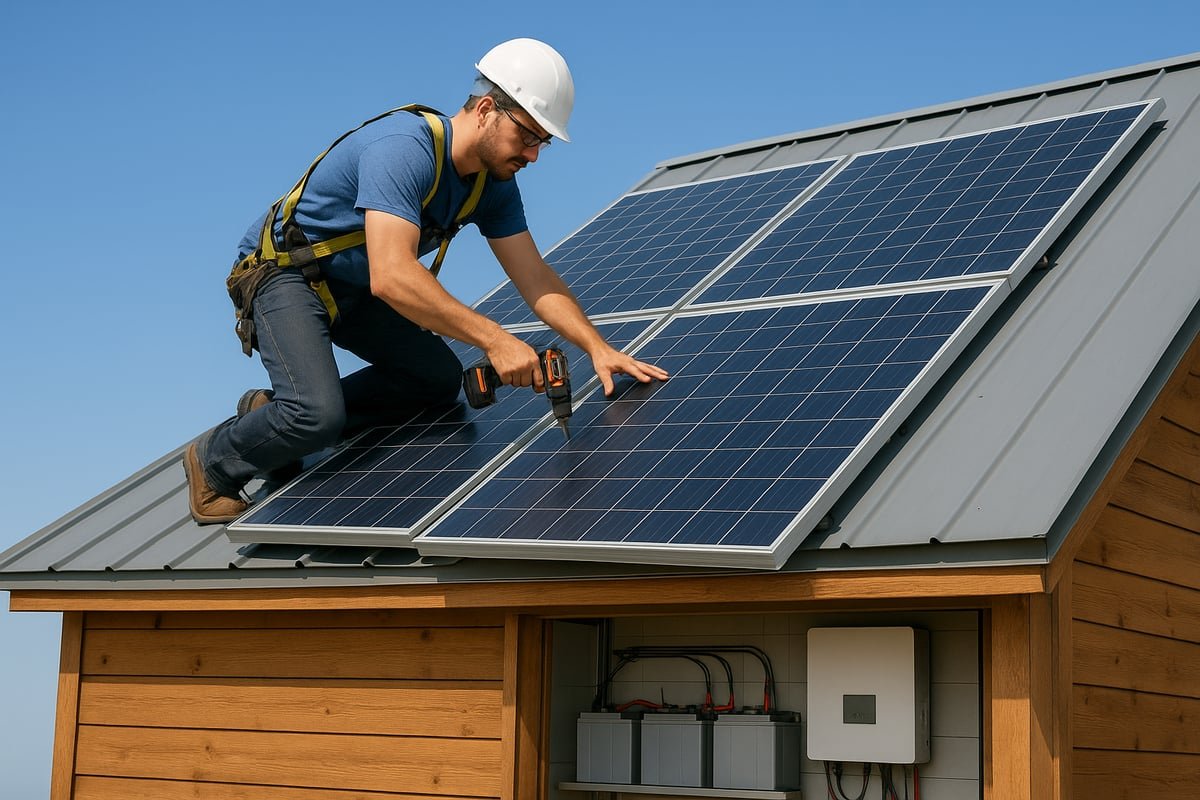
Designing and installing your off grid solar power setup is the stage where planning meets action. Whether you are preparing for emergencies or seeking long-term independence, understanding how to build a reliable system is essential. Each step, from initial design to final testing, plays a vital role in ensuring your system delivers safe, dependable power.
Step 3: Designing and Installing Your Off Grid Solar System
System Design and Site Planning
Every successful off grid solar power setup begins with a detailed system design. Start by sketching a diagram that shows the solar panel array, charge controller, batteries, inverter, and your main load center. This visual guide will help you understand how each component fits together.
Assess your site for sun exposure. A clear, south-facing roof or open land with minimal shading is ideal. Use shading analysis tools to map out the best location for your panels. Decide between a roof mount or a ground mount system based on your property, roof condition, and local weather patterns.
Before installation, check local permitting and electrical codes. Requirements can vary in 2026, so research your area’s rules. For a deeper dive into standards and best practices, review these Off-Grid PV Power System Design Guidelines to ensure your off grid solar power setup meets safety and performance expectations.
Solar Panel Installation
Mounting your solar panels is the most visible part of your off grid solar power setup. Begin by assembling the mounting hardware, ensuring it is rated for local wind speeds. If you live in a hurricane-prone region, choose reinforced mounts and extra anchoring.
Position your panels at the optimal tilt angle for your latitude. Secure the frames to the roof trusses or ground posts, then connect the panels in series or parallel as your system design requires. Use UV-resistant cables and weatherproof connectors to reduce maintenance needs.
After mounting, carefully route the wiring from the panels to the charge controller. Protect all wiring with conduit and install fuses close to the panel array. Regularly check connections for tightness and corrosion to maintain the efficiency and safety of your off grid solar power setup.
Battery Bank Setup
Proper battery bank installation is critical for a dependable off grid solar power setup. Choose a safe, ventilated location for your batteries, such as a dedicated enclosure or utility room. Keep batteries away from living spaces to minimize risks from gas buildup or accidental contact.
Wire batteries in series for higher voltage or in parallel for added capacity. Use heavy gauge cables rated for the expected current. Install fuses and disconnects at both the positive and negative terminals for protection. Label all connections clearly and ensure your battery management system is configured for your chosen battery type.
Monitor temperature and humidity in the battery area, as both can affect performance and lifespan. Secure batteries to prevent movement during storms or earthquakes. Regular inspections will ensure your off grid solar power setup remains safe and reliable.
Inverter and Electrical Integration
Connecting your inverter and integrating the electrical system is where your off grid solar power setup begins to deliver usable AC power. Mount the inverter close to the battery bank to minimize voltage drop. Use appropriately sized cables and ensure all connections are tight.
Connect the inverter’s output to your load center, which distributes power to appliances and outlets. Install surge protection devices and proper grounding rods to protect against electrical faults and lightning. For systems in humid or coastal regions, consider corrosion-resistant components.
Test the inverter’s functions, including surge capacity and smart monitoring features. Review the manufacturer’s guidelines for compatibility with your chosen batteries and solar panels. This careful integration ensures an efficient and safe off grid solar power setup.
System Testing and Commissioning
The final phase of your off grid solar power setup is thorough testing and commissioning. Begin with a checklist: inspect all wiring, confirm fuse ratings, and double-check polarity on every connection. Power up the system and monitor voltage, current, and basic performance.
Use your monitoring equipment to track real-time data from panels, batteries, and inverters. Check for alarms or faults and address any issues promptly. Test the system under full load by running essential appliances, observing voltage stability and inverter response.
Complete a safety review, including fire and weatherproofing inspections. Document your system layout, settings, and maintenance schedule. With your off grid solar power setup fully operational, you are ready to enjoy energy independence and peace of mind.
Step 4: Off Grid Solar Maintenance and Troubleshooting
Staying powered up with your off grid solar power setup requires regular care and fast troubleshooting. Even the most advanced system needs routine upkeep and occasional fixes to keep your energy flowing through all seasons.
Routine Maintenance Tasks
Keeping your off grid solar power setup in peak condition starts with a simple maintenance checklist. Clean your solar panels every few months, removing dust, pollen, and bird debris. Even a thin layer of dirt can reduce output by up to 20%. Inspect panels for cracks or loose connections.
Batteries require close attention. For lead-acid types, check fluid levels and look for corrosion on terminals. Lithium batteries need less hands-on care but still benefit from periodic inspection and monitoring for temperature extremes. Inverters and charge controllers should be checked for error codes and proper operation.
To get the most from your off grid solar power setup, follow practical advice like those found in Maintenance Tips for Off-Grid Solar Systems. Always keep fuses and breakers accessible and test your monitoring equipment regularly.
Common Problems and Solutions
Even a well-maintained off grid solar power setup can face issues. Low power output often results from shading, dirty panels, or wiring faults. Use a digital multimeter to test connections and look for voltage drops. Battery problems such as sulfation or capacity loss can stem from over-discharging or temperature swings.
Inverter errors are another common headache. Overloads, over/under voltage, or frequent resets may point to undersized components or wiring faults. Always consult the inverter manual for error codes.
When troubleshooting, a systematic approach is best. For detailed steps, see Troubleshooting Solar Panels for a comprehensive guide to diagnosing and resolving common issues in your off grid solar power setup.
Seasonal and Weather Considerations
Your off grid solar power setup must withstand changing seasons and harsh weather. Before storm season, secure all panels and mounting hardware. Trim nearby trees to prevent shading and wind damage. In hurricane-prone areas like Florida, use reinforced racking and waterproof battery enclosures.
During extended cloudy periods, monitor battery levels closely. Integrate a backup generator for emergencies, and test it monthly. Extreme heat or cold can impact battery performance, so check temperature ratings and ventilation.
A real-world example: during Florida's hurricane season, a robust off grid solar power setup can keep essentials running when the grid is down. Regular drills and backup protocols ensure you are ready for any scenario.
Upgrading and Expanding Your System
As your needs change, your off grid solar power setup should adapt. Plan for future expansion by choosing modular inverters and scalable battery banks. Adding extra panels or batteries is straightforward when your system is designed with growth in mind.
Keep an eye on emerging technologies like smart home integration and advanced energy management platforms. These upgrades can improve efficiency and make monitoring easier.
Routine upgrades and expansions not only increase reliability but also future-proof your off grid solar power setup against technological changes and rising energy demands.
Step 5: Ensuring Long-Term Energy Security and Independence
Long-term energy security is the ultimate goal of any off grid solar power setup. As you plan for survival and true independence, it is vital to think beyond the basics and build in layers of protection, efficiency, and adaptability.
Building Redundancy and Backup Strategies
A resilient off grid solar power setup requires more than just solar panels and batteries. You need backup strategies to guarantee power during extended cloudy periods or equipment failures.
Consider integrating a backup generator, such as solar, propane, or diesel, to supply energy when your off grid solar power setup cannot meet demand. Automatic transfer switches can make the transition seamless if solar output drops. Manual backup protocols are also important for hands-on system control.
Protect your investment with whole home surge protection and grounding. In areas prone to lightning or electromagnetic pulses, these measures help shield your off grid solar power setup from unexpected events.
Energy Conservation and Efficiency
Efficiency is the silent partner in every successful off grid solar power setup. By reducing your overall load, you stretch your stored energy further and lower wear on batteries.
Adopt energy-saving routines such as:
Switching to LED lighting throughout your home
Using Energy Star appliances
Installing smart thermostats for precise climate control
Practice load shifting by running high-power devices when the sun is strongest. Demand management can extend battery life and prevent system overload. Even small changes, like unplugging standby electronics, make a noticeable difference in your off grid solar power setup.
Legal, Financial, and Community Considerations
Before finalizing your off grid solar power setup, investigate current incentives, rebates, and tax credits available in 2026. These can significantly offset your initial investment and ongoing costs.
Insurance is another aspect to address, as off grid homes have unique coverage needs. Assess how your off grid solar power setup may impact property value, especially in regions with growing energy independence movements.
Connecting with like-minded individuals can amplify your success. Joining or building a local off grid community allows you to share resources and knowledge. For Florida residents, Going Off the Grid in Florida offers insight into regional requirements and opportunities for off grid solar power setup.
The Future of Off Grid Living
The future of off grid solar power setup is bright. Technological advances in solar panels, batteries, and microgrids promise greater efficiency, reliability, and affordability.
Stay informed about policy changes and new incentives that support energy independence. Emerging trends include community microgrids, smart home integration, and remote monitoring. By keeping pace with innovations, your off grid solar power setup will remain secure and adaptable for years to come.
Energy independence is not just a goal—it is a lifestyle that brings security, peace of mind, and the freedom to thrive no matter what the grid may bring.
You’ve just learned how to take control of your energy future, from sizing your off grid solar system to weatherproofing it for Florida’s unique challenges. If you’re ready to turn this knowledge into real independence, why not get expert help tailored to your home or business? At KingAire, we’re dedicated to making your transition smooth, secure, and built for the long haul. You don’t have to navigate the technical details alone—let us guide you every step of the way.
Get a Free Quote
and take your first step toward true energy security.